
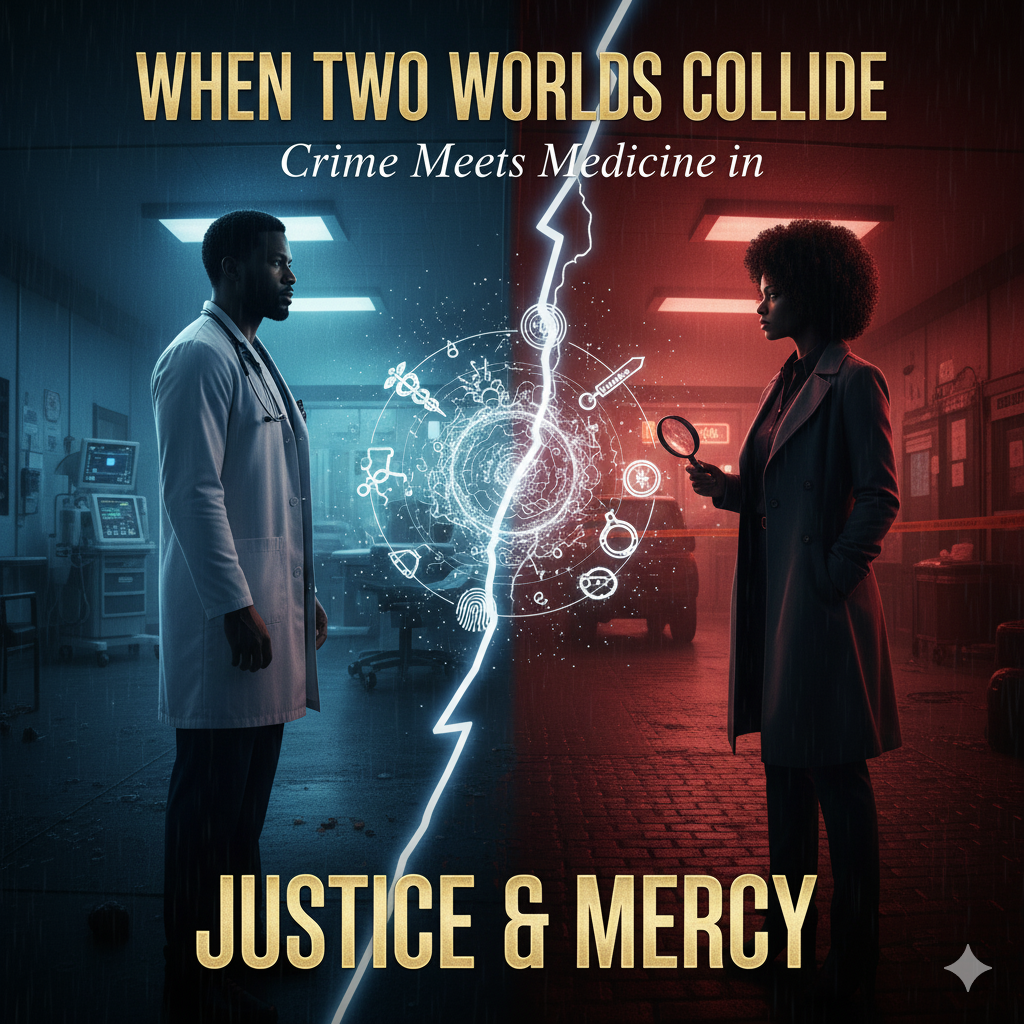
When Two Worlds Collide: Crime Meets Medicine in Justice & Mercy
Series Spotlight
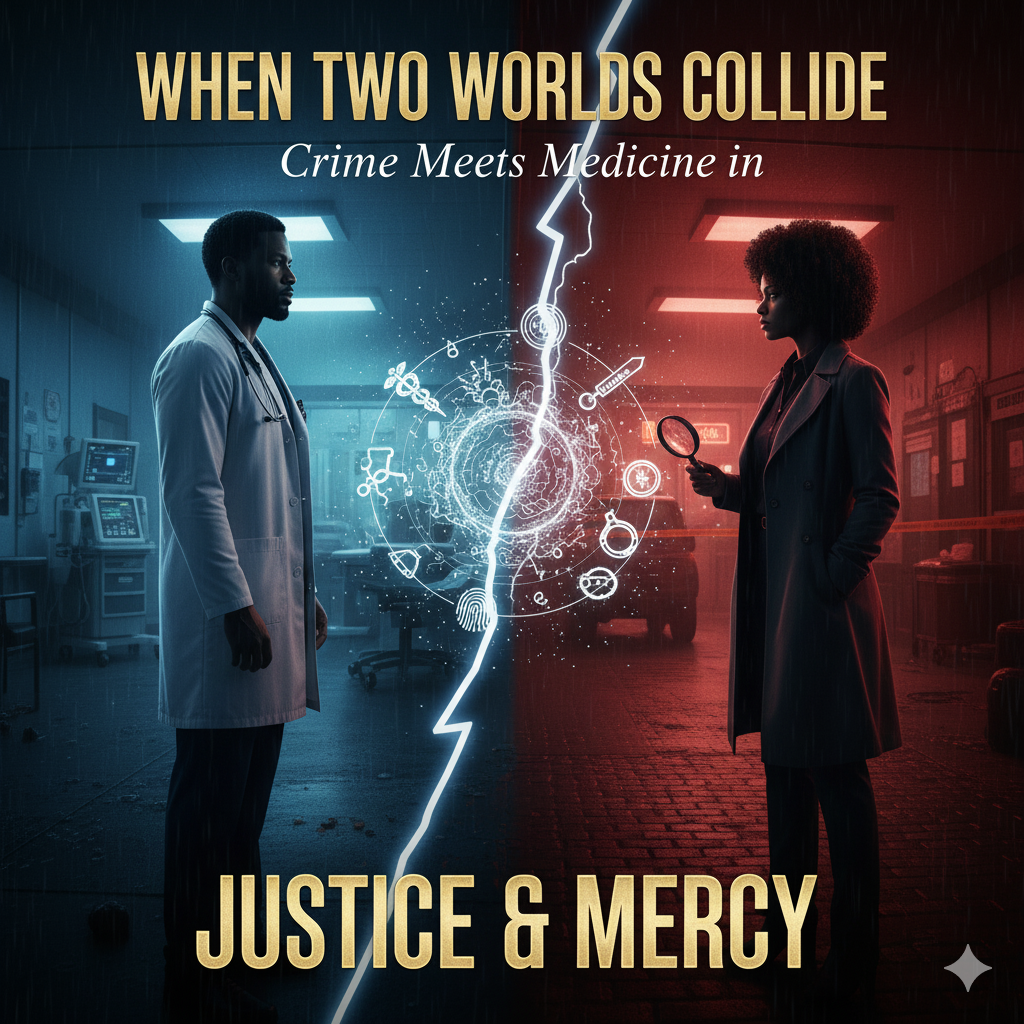
In the heart of New Orleans, two worlds exist in parallel—one of crime and chaos, the other of healing and hope. Detective Justice Blake walks rain-slick streets hunting killers while his wife, Dr. Mercy Blake, races against time in sterile hospital halls saving lives. Their worlds rarely intersect. Until they do.
This is the premise of Justice & Mercy, Obsydia Studios’ ambitious new drama that explores what happens when the law enforcement’s pursuit of justice collides with medicine’s commitment to compassion.
Two Sides of the Same Coin
At first glance, Detective Justice Blake and Dr. Mercy Blake couldn’t be more different in their daily lives. Justice operates in a world of absolutes—guilty or innocent, legal or illegal, right or wrong. Every case he investigates demands that someone be held accountable. Someone must pay.
Mercy, on the other hand, exists in shades of gray. In the emergency room of Crescent City Medical Center, there are no criminals or victims—only patients who need saving. A gunshot wound doesn’t care who pulled the trigger. A dying gang member is still someone’s son.
“What happens when the person Justice arrests becomes the patient Mercy must save?”
This fundamental tension drives the heart of the series. Justice believes in punishment and accountability. Mercy believes in second chances and redemption. Both are right. Both are necessary. And both are married to each other.
When the Worlds Collide
The magic—and the drama—of Justice & Mercy happens at the intersection of these two worlds. Consider these scenarios:
The Murder Victim Who Becomes a Patient
Justice is investigating a brutal assault when the victim is rushed to Mercy’s ER, clinging to life. Justice needs answers. Mercy needs to save a life. The suspect may go free if the victim doesn’t survive to testify, but keeping the victim alive for interrogation could compromise their medical care. Whose duty comes first?
The Medical Case That Uncovers a Crime
Mercy treats a young woman with suspicious injuries. The patient insists it was an accident, but the evidence suggests otherwise. Does Mercy respect patient confidentiality or does she call her detective husband? What if reporting the crime puts the victim in more danger?
The Criminal Who Deserves Compassion
A drug dealer Justice has been pursuing for months ends up on Mercy’s operating table with a life-threatening condition. Justice sees a criminal who’s destroyed countless lives. Mercy sees a patient who deserves the same care as anyone else. Can she save someone her husband desperately wants to see behind bars?
These aren’t simple procedural puzzles to be solved in 45 minutes. These are moral dilemmas that test the very foundation of Justice and Mercy’s marriage, their careers, and their understanding of what it means to do the right thing.
The Blake Marriage: A Battlefield and a Sanctuary
What makes Justice & Mercy more than just another crime or medical procedural is that these professional collisions bleed into the Blake home. Their shotgun-style house in Mid-City becomes both a refuge and a pressure cooker.
“In their home, there are no badges or stethoscopes—just two people trying to hold their marriage together while the weight of their work threatens to tear them apart.”
Justice comes home haunted by the criminals who got away. Mercy brings home the guilt of patients she couldn’t save. They share a bed, but sometimes it feels like they’re living in different cities. The very qualities that make them excellent at their jobs—Justice’s rigidity and Mercy’s empathy—become sources of conflict at home.
Yet they love each other deeply. That’s what makes the show compelling. We watch two good people, both trying to make the world better, struggle to understand each other’s perspective. We root for them not just to solve their cases, but to find their way back to each other.
New Orleans: Where Contradictions Live
There’s a reason this story unfolds in New Orleans. The city itself embodies the contradiction at the heart of the show—a place where joy and tragedy, tradition and progress, spirituality and science, exist side by side.
The same streets that pulse with jazz and celebration by night become crime scenes by dawn. The same city that celebrates life during Mardi Gras holds some of the highest crime rates in the nation. It’s a city of healing and hurting, of mercy and injustice.
In New Orleans, Mercy’s medical expertise collides with her family’s belief in voodoo and spiritual healing. Justice’s by-the-book approach crashes against the city’s complex relationship with law enforcement. The city doesn’t just set the scene—it’s a character that challenges both protagonists at every turn.
The Questions That Drive the Series
Justice & Mercy asks the hard questions:
- Can you love someone whose worldview fundamentally opposes your own?
- Is justice always just? Is mercy always merciful?
- What do you do when your professional duty conflicts with your personal values?
- How do you save your marriage when you can barely save yourself?
- Can two people fighting battles in different arenas truly understand each other’s wars?
These aren’t questions with easy answers, and that’s exactly what makes Justice & Mercy the kind of show you’ll be thinking about long after the credits roll.
“Every choice blurs the line between justice and mercy.”
More Than Procedural Drama
While you’ll get the satisfaction of watching Justice solve intricate homicide cases and Mercy diagnose baffling medical mysteries, Justice & Mercy offers something deeper. It’s a character study. A marriage story. An exploration of morality in a world that doesn’t deal in black and white.
It’s about what happens when two people who’ve dedicated their lives to serving others realize they might be losing each other in the process. It’s about finding grace in a city that tests it at every turn. It’s about discovering that sometimes the hardest person to show mercy to—or seek justice for—is the one sleeping beside you.
The Collision You Won’t Want to Miss
Crime procedurals are everywhere. Medical dramas are a staple of television. But a show that genuinely merges these worlds—not as gimmick, but as genuine exploration of the human condition—that’s rare.
Justice & Mercy doesn’t just ask you to watch two separate storylines run parallel. It demands you confront the collision. To grapple with the same impossible choices the Blakes face. To question your own beliefs about right and wrong, punishment and forgiveness, duty and love.
In the end, Justice and Mercy aren’t just character names. They’re philosophies. They’re opposing forces that somehow must find a way to coexist—in a marriage, in a city, in a life.
Welcome to New Orleans. Welcome to the collision. Welcome to Justice & Mercy.
0 Comments